


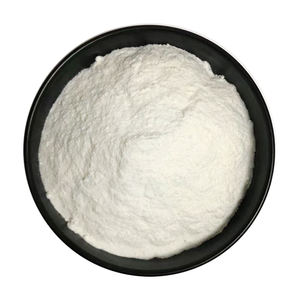
(concrete microfiber)
1. Why Concrete Microfiber Has Good Characteristics
Concrete microfibers enhance the material’s performance by addressing its inherent brittleness. When added to the concrete mix, these tiny fibers act as internal reinforcement, bridging micro-cracks as they form during the early stages of curing and under subsequent loading. This crack control mechanism significantly improves the material’s toughness and impact resistance. The fibers create a three-dimensional network within the concrete matrix, distributing stresses more evenly and reducing crack propagation. This results in improved durability against freeze-thaw cycles, reduced shrinkage cracking, and enhanced resistance to abrasion and wear. The small diameter of microfibers allows for high fiber count per unit volume, ensuring dense reinforcement throughout the matrix without significantly affecting workability. Their effectiveness stems from their ability to modify the concrete’s failure mode from sudden brittle fracture to a more gradual, ductile failure, providing crucial post-crack strength. Learn more about fiber concrete strength and durability.
2. What Is Concrete Microfiber?
Concrete microfiber refers to synthetic or metallic fibers typically ranging from 10 to 100 microns in diameter and 5 to 30 mm in length, specifically engineered for reinforcing concrete matrices. These fibers are manufactured from materials such as polypropylene, nylon, polyester, glass, or steel, each offering distinct performance characteristics. Unlike larger macrofibers, microfibers primarily control plastic shrinkage cracking and enhance durability rather than providing significant structural reinforcement. They function at the microscopic level, inhibiting the formation and propagation of micro-cracks that develop during the critical early curing phase and throughout the concrete’s service life. Microfibers are typically added at dosage rates between 0.5 to 2.0 kg per cubic meter of concrete, dispersing throughout the mix to form a homogeneous reinforcing network. Their primary role is to improve the concrete’s resistance to impact, abrasion, and environmental degradation while maintaining the material’s workability and finishability.
3. How Concrete Microfiber Was Produced?
The production of concrete microfibers involves specialized manufacturing processes tailored to the base material. Polypropylene microfibers are typically produced through extrusion processes where polymer pellets are melted and forced through fine spinnerets to create continuous filaments. These filaments are then stretched to align the polymer molecules, enhancing tensile strength, before being cut to precise lengths. For steel microfibers, fine wire is drawn to the required diameter and cut to length, often undergoing surface treatments like galvanizing or copper coating to enhance corrosion resistance and bonding with the cement matrix. Glass microfibers are manufactured by drawing molten glass through bushings, creating continuous filaments that are subsequently sized with chemical coatings to improve compatibility with concrete. Quality control is paramount, with manufacturers conducting rigorous testing for dimensional accuracy, tensile strength, and alkali resistance. The fibers may be bundled or fibrillated during production to ensure optimal dispersion when mixed into concrete. Discover innovations in fiber mix technology.
4. What Are The Application Fields of Concrete Microfiber?
Concrete microfibers find diverse applications across construction sectors due to their versatile performance benefits. In residential construction, they’re extensively used in floor slabs, driveways, and basements to minimize plastic shrinkage cracking and improve surface durability. Commercial applications include industrial flooring subjected to heavy traffic and impact, where microfibers enhance abrasion resistance and reduce dusting. Infrastructure projects utilize microfibers in bridge decks, pavements, and tunnel linings to improve durability against freeze-thaw cycles and deicing salts. Precast concrete elements benefit from reduced cracking during handling and transportation. Shotcrete applications employ microfibers to enhance cohesion and reduce rebound during spraying operations. Architectural concrete uses microfibers to achieve crack-free surfaces with superior finish quality. Microfibers are particularly valuable in thin-section applications like overlays, toppings, and precast panels where conventional reinforcement is impractical. They also provide secondary reinforcement in structural elements to complement rebar and control shrinkage stresses. Explore structural integrity applications.
5. How To Choose A Good Concrete Microfiber
Selecting quality concrete microfibers requires evaluating several technical parameters. Material compatibility is paramount—polypropylene fibers offer chemical resistance and cost-effectiveness, while steel fibers provide higher tensile strength but require corrosion protection. Fiber geometry significantly influences performance; optimal aspect ratios (length to diameter) typically range from 100 to 600 for effective crack control. Surface characteristics affect bonding; textured or deformed fibers enhance pullout resistance. Consider the project’s specific requirements: for plastic shrinkage control, polypropylene microfibers are ideal, while for enhanced toughness, consider hybrid systems combining micro and macro fibers. Verify manufacturer certifications and test reports for alkali resistance, tensile strength, and dispersion characteristics. Evaluate dosage rates based on performance requirements without compromising workability. Compatibility with other admixtures should be confirmed through trial mixes. Finally, assess supplier technical support and product consistency to ensure reliable performance across multiple batches. Quality microfibers should demonstrate uniform dimensions, consistent dispersion, and resistance to balling during mixing.
6. What Does People Also Ask About Concrete Microfiber?
Common questions about concrete microfibers include: “How do microfibers differ from steel mesh or rebar?” Unlike structural reinforcement, microfibers provide three-dimensional secondary reinforcement throughout the matrix, controlling micro-cracking but not replacing primary reinforcement. “Can microfibers completely prevent cracking?” While they significantly reduce plastic shrinkage and micro-cracking, they cannot eliminate all cracking caused by structural loading or significant restraint. “Are there different types for specific applications?” Yes, specialized microfibers exist for shotcrete, lightweight concrete, and high-early strength applications. “How do microfibers affect concrete finishing?” Properly selected microfibers shouldn’t impede finishing when used at recommended dosages. “What about long-term performance?” Quality microfibers maintain their performance throughout the concrete’s service life, as evidenced by structures demonstrating enhanced durability over decades. “How do they compare to carbon fiber reinforcement?” While both enhance performance, carbon fibers offer superior strength and corrosion resistance but at higher cost. Learn about carbon fiber reinforcement comparisons.
Tags: concrete microfiber, polypropylene microfiber, synthetic fiber reinforcement, fiber reinforced concrete, concrete crack control, shrinkage reducing fibers, micro fiber concrete, construction fibers
(concrete microfiber)
Supplier
Mis-Asia is committed to technology development, applications of nanotechnology, and new material industries, with professional experience in nanotechnology research and development and the application of materials. As a leading manufacturer of nanotechnology development and product applications, we offer solutions for every process and step in the laboratory and industry. Our professional work team provides the perfect solutions to help industries improve efficiency, create value, and easily meet challenges.