


Throughout a keynote address that lasted over two hours, Huang not only unveiled the latest technological breakthroughs but also delivered a financial forecast that got investors’ adrenaline pumping. He recalled that just a year ago, market demand for the Blackwell and subsequent Rubin chips through 2026 was estimated at roughly $500 bhiriyoni. Zvino, standing at a new inflection point, he confidently doubled that figure.
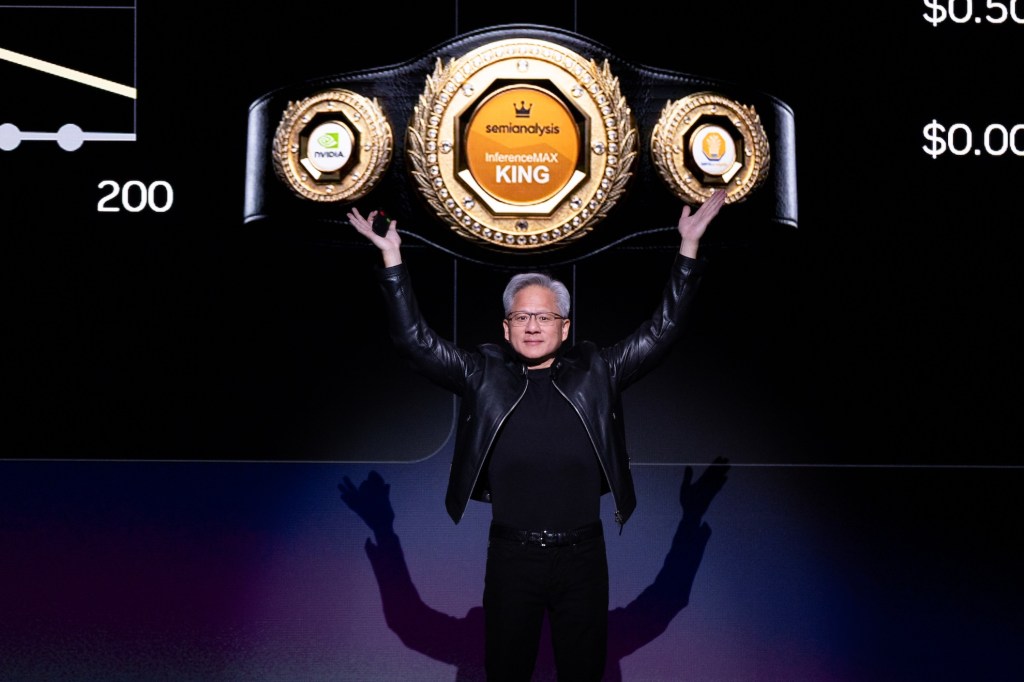
“Five hundred billion is already an astronomical number,” Huang said during his speech. “But today, I’m here to tell you that looking ahead to 2027, what I see is at least $1 trillion in demand.”
This bold proclamation is backed by Nvidia’s relentless technological edge. The Vera Rubin architecture, unveiled in 2024 as the company’s latest-generation AI chip, was hailed by Huang as the “new pinnacle” of AI hardware. According to Nvidia’s official data, the Rubin architecture will be 3.5 times faster than its predecessor, Blackwell, on model training tasks, and five times faster on inference tasks, with peak performance reaching up to 50 petaflops. Such a significant leap in performance is the core driver compelling global tech giants to keep placing orders.
Nvidia has made it clear that it expects to significantly ramp up production of Rubin chips in the second half of this year to meet surging market demand. This trillion-dollar outlook will undoubtedly further cement Nvidia’s dominance in the AI computing landscape.