


As the world accelerates toward electrification, the oil and gas industry is counting on plastics to sustain future profits. But Jacob Nathan may have other plans.
Nathan began searching for ways to break down plastic while still in high school. ตอนนี้, as founder and CEO of Epoch Biodesign, he has developed a technology that uses enzymes to break down plastic waste and convert it into raw materials that can be used to remake plastic. “For us, a bale of textile waste is the equivalent of a barrel of oil,” Nathan says. Unlike traditional petroleum-based feedstocks, the price of waste textiles is not subject to geopolitical shifts or market volatility.
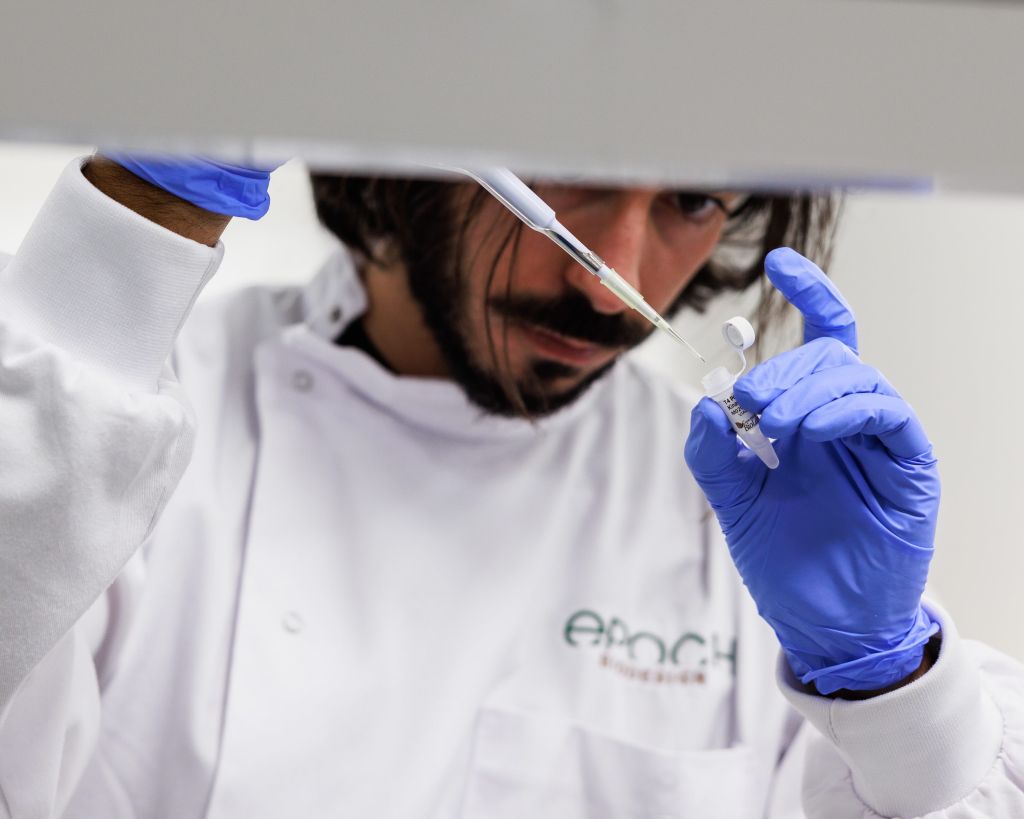
At the core of Epoch’s process is breaking down pre- and post-consumer plastic waste into monomers—the fundamental building blocks of plastic. Through a cascade of enzyme treatments, the company can recover over 90% of the target monomers, with any remaining dyes collected and processed separately. The technology is first being applied to nylon 6,6, a high-strength synthetic material widely used in clothing, airbags, carpets, and climbing ropes.
Nathan notes that the timing couldn’t be better. Spot prices for nylon 6,6 precursors have recently surged by as much as 150%, yet by starting with waste textiles instead of petroleum, Epoch is able to sidestep such volatility entirely, creating a more stable supply of materials.
The vision has already attracted investors, including apparel giant Lululemon, which recently participated in a $12 million funding round. The investment will support the development of a demonstration-scale facility, with plans to bring a commercial-scale plant online by 2028 capable of producing 20,000 metric tons of monomers annually. มองไปข้างหน้า, the technology could also be adapted to recycle other types of plastics.